Leave Your Message
0%

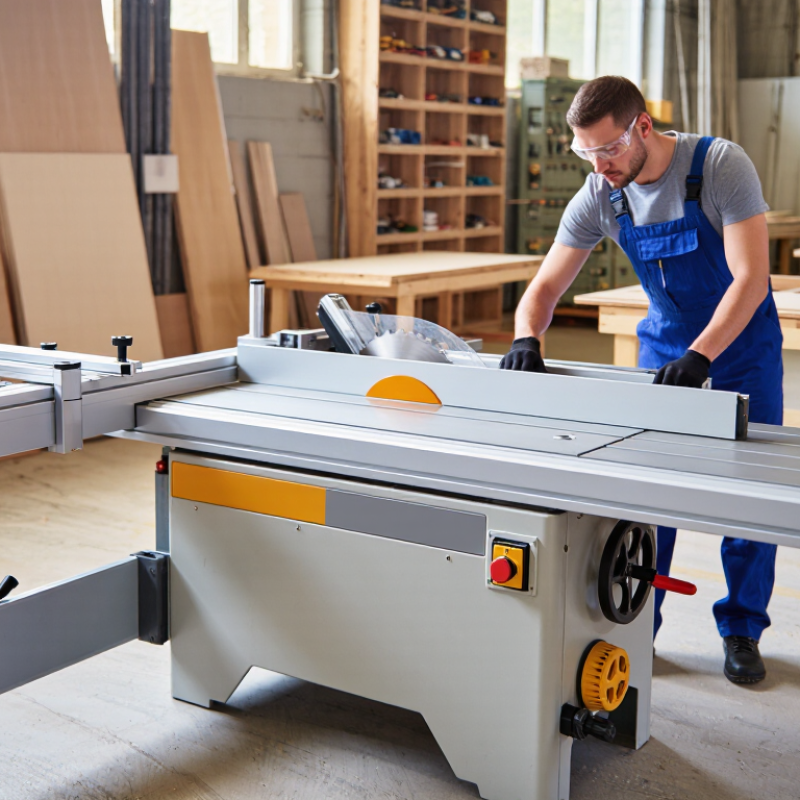
Alright, so you're looking at sliding table saws in China? First thing to ask yourself is what you'll actually be using it for. A big cabinet shop cutting full-size panels obviously needs something different than a small workshop churning out doors or furniture parts. And honestly, don't get too hung up on motor power. You want to look at the sliding carriage length, how stable the table is, whether the fence adjusts smoothly, blade tilt, and—this is big—whether it can hold repeatable dimensions. Ask the supplier for specs, request some operating videos, and get clear photos of the controls and safety guards. It's the little details that really matter. Honestly, if your carriage moves smoothly when it's carrying a load, it makes a world of difference—you save time and avoid those uneven cuts.

So when you're shopping around for a sliding table saw, don't just look at the specs—actually ask the supplier how they check alignment and, more importantly, what kind of support you'll get after it's delivered. You'll also want to nail down the details on installation, spare parts, warranty, and even the electrical setup. And if you get the chance, try to see a sample cut on something close to what you'd actually be using, like a veneered board or solid wood panel. That'll tell you a lot. Honestly, you’ve got to measure the actual result—don’t just get swept up in a polished demo. A shiny catalog isn’t proof of anything. And don’t forget to verify the export documents and certifications for your destination and your specific model. Sure, these checks won’t eliminate every risk; even a remote video can hide vibration or noise. That’s worth keeping in mind. The best machine isn’t necessarily the most powerful or the cheapest one. It’s the one whose verified performance, service setup, and operating limits truly fit your day-to-day workload.
How to Choose the Best Sliding Table Saw in China?

Identify Sliding Table Saw Types and Match Them to Workpiece Dimensions

How to Choose the Best Sliding Table Saw in China?
Identify Sliding Table Saw Types and Match Them to Workpiece Dimensions

Start with the stock, not the machine’s headline capacity. A sliding-table panel saw suits sheet goods and wide boards because its carriage supports the workpiece during a controlled crosscut. For a 2,440-by-1,220-millimetre panel, check the usable carriage travel and fence range, not just the blade size. A compact sliding saw may handle narrow components well but struggle with full sheets. Measure the largest and heaviest pieces your shop actually processes.

Round stock needs a different setup. A Round Wood Sliding Table Saw uses suitable support and clamping to steady logs or poles; confirm the permitted diameter and length before ordering. FAO’s 2023 Forest Products Annual Market Review reports global industrial roundwood production of about 1.92 billion cubic metres in 2022. That figure shows the scale of the material sector, not a recommended machine capacity. Your own stock dimensions matter more. Small details, like tapered ends or uneven bark, can affect safe positioning.

For mixed work, compare carriage length, table width, maximum cutting depth, and support extensions against real workpieces. Leave room for loading and offcut removal. Ask for a dimensional drawing and a demonstration using material close to yours. Specifications can look generous on paper. I would still measure twice; a tight shop layout is easy to underestimate. A machine suited to long panels may be awkward for short parts, while oversized capacity can waste floor space.

Choose a Sliding Table Saw by Workpiece Length

Typical sliding-table travel varies by model. Use the examples below as a starting point, and choose a saw with enough travel for your panel length and handling needs.

Compact saws suit shorter panels, while workshop and industrial saws provide more travel for larger sheet goods. Confirm the manufacturer’s specifications before selecting a machine.

Confirm 380 V, 50 Hz Supply and Motor-Power Requirements in China

Before choosing a sliding table saw in China, confirm the workshop’s actual supply. Many industrial sites use three-phase 380 V, 50 Hz power, but do not rely on that assumption. Check the machine’s nameplate and ask a qualified electrician to measure the supply at the intended connection point. A mismatch can cause poor starting, overheating, or motor damage. Small details matter.

Match the motor rating to the saw’s workload, not just its price or horsepower figure. A larger blade, dense hardwood, and steady production can demand more power than occasional panel trimming. Check the motor’s rated voltage, frequency, phase, current, and starting requirements. Then confirm that the circuit, protective devices, cable, and grounding are suitable. Allow for dust extraction equipment, too; it may need a separate circuit. If the site has 220 V power, do not assume an adapter solves the problem. Ask whether a properly specified transformer or compatible machine configuration is available. Frequency converters can affect motor speed and performance, so use one only when the manufacturer approves it. I would double-check the electrical plan before delivery. It can feel tedious, but changing a connection after installation is worse.

Compare 300–400 mm Blades, Cutting Depth, and 90°/45° Angles

When comparing a Sliding Table Saw, look beyond the blade diameter. A 300 mm blade may suit regular sheet work, while a 400 mm blade can offer greater cutting depth. The actual capacity depends on the arbor, blade position, and machine design. Bigger is not automatically better. Ask for the maximum depth at both 90° and 45°, and check whether figures are measured with the supplied blade. A catalog number alone can leave out useful details.

At 90°, the saw should cut squarely through your usual stock thickness. At 45°, expect less depth; confirm the stated capacity before choosing material sizes. Ask the supplier for a test cut or a clear measurement, then check the angle with a reliable square. Small alignment errors show up as gaps in a miter joint. Check the sliding table for smooth travel, too. It should move steadily without shifting the workpiece. I would verify these points in person when possible; specifications do not reveal every setup issue, and I might overlook one on a rushed inspection.

Measure Table Travel, Fence Accuracy, and Repeatability in Millimetres

When comparing sliding table saws in China, measure the carriage instead of relying only on the catalogue’s maximum travel. Place a steel rule parallel to the blade and check usable movement from stop to stop. Record the result in millimetres. A quoted 3,200 mm may not be fully usable once clamps or the crosscut fence are fitted. Small detail. Big difference.

Check fence accuracy at several positions, not just at the starting point. Use a reliable square to set 90 degrees, then make a test cut and measure the workpiece. A dial indicator can help reveal fence movement as it travels. Note the readings and your measuring method; otherwise, comparisons between machines can be misleading. There is no single tolerance that suits every job.

Repeatability matters on real production runs. Make five or more cuts using the same setup, then compare the dimensions with a caliper or tape suited to the required precision. A clean showroom test can flatter any machine. If possible, repeat the test with your material, blade, and operator. Floor leveling and clamping pressure can change results, and I would not treat one perfect cut as proof of consistent performance.

Specify at Least 20 m/s Dust-Extraction Duct Velocity for Wood Dust

When choosing a sliding table saw in China, inspect the dust system alongside the cutting capacity and table travel. Specify a duct velocity of at least 20 m/s for wood dust, then ask how the figure will be verified on site. A fan’s nameplate rating alone cannot confirm airflow through the installed ductwork. Measure it.

Check the extraction hood around the blade and scoring unit, where fine dust can escape during a cut. Duct diameter, bends, leaks, and clogged filters all affect performance. Ask for readings at practical operating points, not only near the fan. A handheld anemometer or suitable airflow test can help confirm the result, though test conditions should be recorded.

This target is useful, but it is not a magic number. Dust type, machine layout, and local technical requirements may call for further review by a qualified ventilation professional. Compare the supplier’s test method, filter maintenance plan, and noise level before deciding. If a Sliding Table Shaper is part of the workshop, include its extraction branch in the same airflow assessment. I would not assume a well-sized duct stays effective without regular inspection. Check for settled dust, loose joints, and reduced flow after installation.

Verify Safety Features Against ISO 19085-9:2020 and Compare Service Costs

For a Table Panel Saw, ask the supplier for documentation against ISO 19085-9:2020, which covers circular saw benches with and without sliding tables. Check the machine’s exact configuration, not just a general certificate. Request evidence for guarding, the riving knife, emergency stopping, and braking features. Then inspect how the guard moves over a long panel. It should not snag or leave the blade exposed during routine cuts. Small details matter.

Safety figures deserve context. The U.S. Bureau of Labor Statistics reported 2.8 recordable cases per 100 full-time workers in manufacturing in its 2023 injury and illness data. This is an industry-wide rate, not a saw-specific risk estimate. Still, it supports checking training needs, safeguards, and maintenance access before purchase. A standard helps define checks; it does not replace a practical inspection.

Compare service costs over three years. Include scheduled labor, replacement parts, travel fees, response times, and expected downtime. Ask for written prices for common wear items, such as belts and blade components. Put each quote beside the machine price. A lower purchase cost can look attractive, yet one delayed part may stop a small workshop. One caveat: supplier estimates can be optimistic, so verify local technician availability and lead times. I would also record actual service spending after installation; that feedback is easy to overlook.

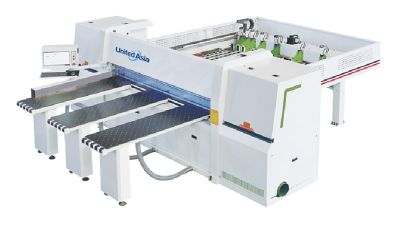
Precision Wood Cutting with the MJ270 Computer Beam Saw Machine

Precision Wood Cutting with the MJ270 Computer Beam Saw Machine begins with accurate, computer-controlled operation. Designed for modern woodworking production, the MJ270 helps operators make consistent cuts while improving processing efficiency and finished-edge quality. Its intelligent controls simplify everyday tasks, allowing workers to learn the operating process with straightforward training and spend less time on manual adjustments.

Built with precision-selected materials and a sturdy structure, the machine is made to handle demanding production routines. Reliable positioning and controlled cutting support accurate results across repeated jobs, while thoughtful safety features help create a more secure working environment. By combining dependable construction, efficient performance, and easier operation, the MJ270 can help woodworking businesses make better use of production time and maintain consistent standards.

FAQS

Is a 400 mm blade always better than a 300 mm blade?

No. A 300 mm blade may suit regular sheet work. A 400 mm blade can offer more cutting depth, depending on machine design.

What cutting depth should I check at 90° and 45°?

Ask for the maximum depth at both angles. The 45° capacity is usually lower, so compare it with your material thickness.

Should cutting-depth figures include the supplied blade?

Yes, clarify how the figures were measured. A catalog number alone may leave out useful details.

How can I check whether a saw cuts accurately?

Request a test cut, then check the angle with a reliable square. Even small errors can leave gaps in a miter joint.

What should the sliding table feel like during operation?

It should travel smoothly and steadily without shifting the workpiece. Check this in person if possible.

What duct velocity should I specify for wood dust?

Specify at least 20 m/s, then ask how airflow will be verified on site. Measure it.

Is a fan’s rated airflow enough to confirm dust extraction?

No. Duct bends, leaks, diameter, and clogged filters can reduce airflow. Ask for readings at practical operating points.

What else should I inspect in the dust system?

Check the hood near the blade and scoring unit, plus filter maintenance and noise. Include connected machines in the airflow assessment.

Does meeting 20 m/s guarantee effective dust extraction?

Not by itself. Dust type and machine layout matter, and a ventilation professional may need to review the setup. I might miss a small leak during a rushed inspection.

Conclusion

Choosing the right Sliding Table Saw in China starts with matching the machine type and table capacity to the size and thickness of your workpieces. Confirm that the available electrical supply is 380 V, 50 Hz, and check that the motor has enough power for the materials and workload. Compare blade diameters in the 300–400 mm range, along with cutting depth and the machine’s ability to make accurate cuts at both 90° and 45°.

Before purchasing, measure table travel and assess fence accuracy and repeatability in millimetres, since these affect the consistency of repeated cuts. For wood dust management, specify extraction duct velocity of at least 20 m/s and ensure the extraction setup suits the workspace. Finally, verify that the saw’s safety features align with ISO 19085-9:2020, and compare routine service needs and costs. Evaluating these practical factors together helps identify a machine that is suitable, precise, safe, and economical to maintain.


Eleanor

Eleanor

Eleanor is a marketing professional specializing in technologically advanced wood processing solutions. With a strong understanding of industrial components and the practical needs of manufacturers, she makes complex product information clear, useful, and relevant. She regularly contributes expert......
Previous Why Choose a Band Saw for Your Business?
Next Top 10 Cold Press Machines for Global Buyers