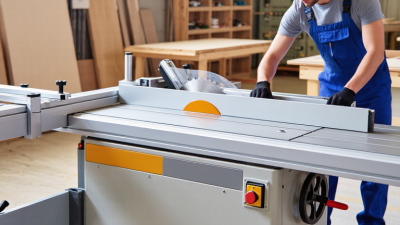
Honestly, a band saw can really earn its keep in a shop where you’re dealing with all kinds of materials, repeating the same cuts over and over, and where wasted stock actually hurts your bottom line. Depending on the blade you put in it, it can handle straight lines or curves through wood, metal—whatever’s compatible. And on a busy floor, that kind of flexibility means you don’t have to keep shuffling work from one machine to another. That said, it’s not some magic shortcut to perfect results. When you're cutting on a bandsaw, it's not just one thing that matters. The blade you pick, how much tension it's got, the guides, and even the feed rate—they all play a part in the final cut.
Alex Snodgrass, who teaches bandsaw stuff, always hammers on setup. Honestly, his whole deal can be summed up pretty simply: tune the saw before you blame it. And that really matters if you're trying to keep cuts consistent all day long. A machine that's dialed in just works better—cleaner edges, less wasted material, and you're not constantly fighting it. It's the little things, too. If your blade starts drifting, you'll notice. Rough edge, or worse, you ruin an expensive piece and have to start over.
Alright, so this article basically looks at where a band saw actually makes sense in a business, what kinds of materials and jobs it’s good for, and what you should really think about before buying one. We’ll dig into blade costs, how much floor space it’ll take up, operator training, maintenance, and safety features too. Honestly, the right saw isn’t the one with the flashiest brochure — it’s whatever fits your real production needs. So before you hand over any cash, compare the cut capacity against the stock sizes you typically use, and if you can, test it on the materials you’ll actually be cutting. And don’t ignore the trade-offs. They matter more than you’d think. I'll admit, a band saw can seriously boost your versatility in the shop. But here's the thing—you can't just wing it when it comes to setup and routine maintenance. Those need a bit of planning, plain and simple.
Define Band Saws and Their Role in Commercial Cutting Operations
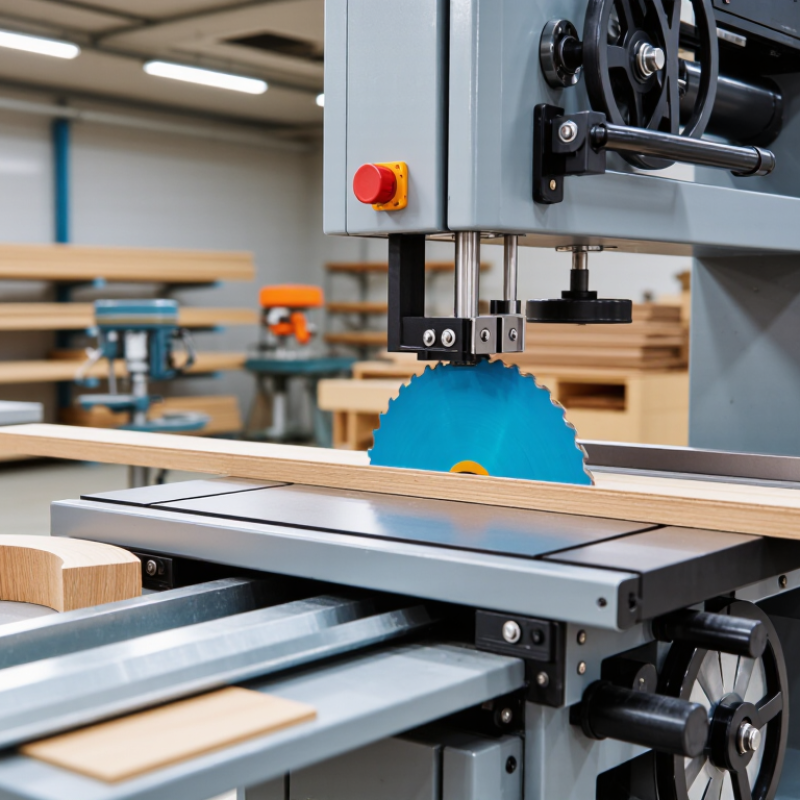
A band saw uses a continuous toothed blade stretched around rotating wheels. The blade travels in one direction, allowing material to pass through a steady cutting zone. A Band Saw Machine may be configured for metal, wood, or other suitable stock, but blade type and machine capacity must match the material. One setup does not fit every job.
In commercial cutting operations, band saws handle repeated straight cuts, angled cuts, and, on some models, curved profiles. A fabricator might use one to cut steel bar into measured lengths before machining. A timber workshop may use a different configuration to break down boards. The narrow blade can reduce material waste on some cuts, while controlled feeding helps produce consistent pieces. Yet accuracy still depends on setup. Blade tension, tooth pitch, feed pressure, and workpiece support all matter.
A cut that looks easy can wander. That is worth remembering. Operators should secure the stock, use suitable guarding, and follow the machine’s operating instructions. They also need to inspect blades for wear and choose speeds appropriate to the material. In practice, a slower cut may be the right cut, though production pressure can make that choice less obvious. A band saw’s role is not simply to cut quickly; it is to provide a repeatable, manageable way to size materials for the next stage of work.
Compare Horizontal and Vertical Saws for Different Production Tasks
Horizontal and vertical band saws solve different production problems. A horizontal saw is usually better for cutting bars, pipes, and bundles to fixed lengths. Its vise holds the stock steady while the blade travels through it. For repeated cuts, a powered feed can reduce handling time and help keep lengths consistent. Operators should still check blade tension and coolant flow; a fast cycle is not useful if the cut drifts.
A vertical saw suits work that needs curved or irregular cuts. The operator guides sheet, plate, or a large workpiece against the blade, making shape changes easier without repositioning a long bar. That control takes practice. Small adjustments matter. A Heavy Duty Band Saw may support demanding workloads, but capacity alone does not determine the right machine. Compare the widest stock, cut angle, batch size, and available floor space. Also consider how each setup handles offcuts and loading. I have seen shops focus on cutting speed, then discover that material handling is the real bottleneck. Not always. A trial cut with the actual material can reveal blade wandering, rough edges, or awkward clamping before production begins.
Why Choose a Band Saw for Your Business?
Compare horizontal and vertical band saws by how well they suit common production tasks.
Horizontal saws are generally suited to repeat straight cuts, cutting bundles, and processing long or heavy stock. Vertical saws offer more flexibility for contour cutting, irregular shapes, and varied short-run work. Ratings are qualitative comparisons on a 1–5 scale, not measured performance data.
Match Saw Capacity to Stock Dimensions and Manufacturer Data
A saw’s advertised capacity is only useful when it matches the stock you actually cut. Measure the largest width and height, then check the manufacturer’s capacity chart for rectangular, round, and angled cuts. A bar measuring 250 mm by 180 mm may exceed a machine’s capacity once the vise, blade guide, or miter angle is considered. Leave room for clamping and material variation. Measure the awkward piece.
Compare those dimensions with the machine’s published data: maximum cut size, blade width, cutting speed, and feed method. For bundled stock, confirm that the vise holds the full bundle securely; single-piece capacity does not prove bundle capacity. A Heavy Duty Band Saw Machine may offer ample power, yet still be a poor fit if its throat or work table limits long sections. Small margins matter.
Capacity choices also affect safe handling. The U.S. Bureau of Labor Statistics reported a 2.8 recordable-injury-and-illness rate per 100 full-time workers in manufacturing for 2023. That figure is not specific to saws, and it does not show that larger capacity reduces injuries. Still, it supports careful work planning: avoid forcing oversized stock into a machine, and review the operating manual before cutting unfamiliar shapes. Recheck the actual stock dimensions; supplier labels can round them.
Estimate Throughput Using Published Cut-Rate and Blade-Kerf Specifications
Published cut-rate figures can help estimate daily output, but check what the number measures. Blade speed, often listed in feet per minute, is not the same as feed rate through the workpiece. Use a stated feed rate when available, and confirm the material and section size match your job. Those details matter.
For a simple estimate, divide the blade’s travel across the cut by its feed rate. A four-inch cut at two inches per minute takes about two minutes under those conditions. Add time for clamping, measuring, unloading, and occasional blade changes. If handling adds 30 seconds, the estimate becomes roughly 24 cuts per hour, before breaks or interruptions. That is a planning figure, not a promise.
Kerf affects how much usable stock remains. If a blade removes 0.05 inch per cut, ten cuts consume about half an inch of material in kerf alone. Include that loss when calculating parts from a bar or tube, especially when finished lengths are tight. Published figures may assume ideal setup and consistent material. Real stock can vary. Run a short trial, record actual cycle times and scrap, then revise the estimate; I would not trust a catalog number without that check.
Why Choose a Band Saw for Your Business? — Estimate Throughput Using Published Cut-Rate and Blade-Kerf Specifications
| Example Workpiece |
Cutting Dimension |
Cut-Rate Input
(mm/min) |
Blade Kerf Input
(mm) |
Estimated Sawing Time
(min/cut) |
Theoretical Cuts
(cuts/hour) |
Kerf Material Used
(mm per 100 cuts) |
| Round bar |
50 mm diameter |
25 |
1.3 |
2.00 |
30.0 |
130 |
| Round bar |
100 mm diameter |
40 |
1.3 |
2.50 |
24.0 |
130 |
| Round bar |
150 mm diameter |
50 |
1.6 |
3.00 |
20.0 |
160 |
| Rectangular bar |
100 mm wide × 50 mm high |
40 |
1.3 |
2.50 |
24.0 |
130 |
| Rectangular bar |
150 mm wide × 75 mm high |
50 |
1.6 |
3.00 |
20.0 |
160 |
|
Planning illustration: The cut-rate and kerf figures above are example inputs, not published specifications for a particular machine or blade. Replace them with the values published for the selected saw, blade, material, and cutting conditions. Actual production will also depend on handling time, setup, blade condition, and operator practice. |
|
Calculation: Estimated sawing time = cutting dimension ÷ cut-rate input. Theoretical cuts per hour = 60 ÷ estimated sawing time. Kerf material used per 100 cuts = blade kerf × 100. These estimates exclude loading, unloading, setup, and other downtime. |
Assess Machine Safeguards Against ANSI B11.10 and OSHA Requirements
Why Choose a Band Saw for Your Business?
Assess Machine Safeguards Against ANSI B11.10 and OSHA Requirements
A band saw can deliver consistent cuts, but safeguards deserve equal attention during equipment selection. Use ANSI B11.10, Safety Requirements for Metal Sawing Machines, to assess blade exposure, workpiece support, controls, and foreseeable operator access. Inspect the blade path, guides, and opening near the cutting zone. Check whether guards remain effective during routine adjustments. Small details matter. OSHA 29 CFR 1910.212 requires guarding against point-of-operation hazards and other machine dangers. For servicing, OSHA’s lockout/tagout standard, 29 CFR 1910.147, addresses hazardous energy control. Treat ANSI as a technical benchmark, not a substitute for applicable OSHA requirements.
The U.S. Bureau of Labor Statistics reported a 2.8 recordable-case rate per 100 full-time workers in manufacturing in 2023. This broad industry figure is not specific to band saws, but it reinforces the value of careful hazard reviews. During a site walk-through, qualified staff should verify guard stability and test safety devices under controlled procedures. Ask operators to demonstrate normal loading and material removal. Do hands approach the blade when stock shifts? Check the actual machine. Record gaps, assign corrective actions, and review the setup after changes in material, tooling, or work practices. A checklist can miss awkward tasks; watch the real cutting process, too.
Evaluate Workplace Noise Against OSHA’s 85-dBA Action Level and 90-dBA PEL
A band saw can deliver accurate cuts, but workplace noise deserves measurement before purchase. OSHA sets an 85-dBA, eight-hour time-weighted average action level for hearing-conservation requirements. Its permissible exposure limit (PEL) is 90 dBA over eight hours. These are exposure averages, not simple machine-on readings.
NIOSH’s Criteria for a Recommended Standard advises limiting occupational exposure to 85 dBA over eight hours, using a 3-dB exchange rate. Each 3-dB increase halves the recommended exposure time. A Wood Band Saw may sound modest during one brief cut, yet repeated cutting, material handling, and nearby equipment can add up. Measure near the operator’s ear and across a representative shift. A calibrated dosimeter helps capture personal exposure; one spot reading can miss changing noise levels.
Under OSHA standard 29 CFR 1910.95, exposures at the action level trigger a hearing-conservation program. The standard also requires feasible controls when exposure exceeds the PEL. Blade condition, cutting stock, machine enclosure, and room reflections can change readings. Record the setup. Recheck after changes. Noise figures alone cannot decide a machine’s value, but they may reveal a weak assumption in a purchase plan.
Precision Saw Maintenance Made Simple with the F-125 High Quality Mini Saw Grinder Machine
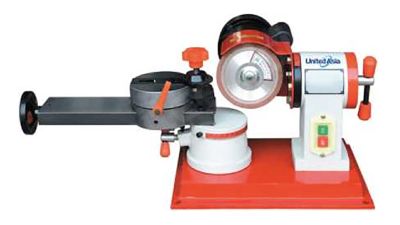
Keeping saw blades sharp is essential for clean cuts, steady performance, and efficient workshop routines. The F-125 high-quality mini saw grinder is designed to make this maintenance more approachable, combining a compact form with portability and user-friendly operation. Its manageable size makes it easier to move between work areas, while its straightforward design helps craftsmen and DIY users carry out routine grinding without unnecessary setup or effort. For small workshops or jobs that require tools to travel, this balance of convenience and capability can be especially useful.
The value of dependable maintenance is reflected in workforce trends: the U.S. Bureau of Labor Statistics’ *Occupational Outlook Handbook* projects employment of industrial machinery mechanics to grow 13% from 2024 to 2034, highlighting continued demand for equipment upkeep and technical skills. The F-125 supports that practical approach by providing a dedicated tool for saw-grinding tasks in a portable format. Regular, careful blade maintenance can help users maintain consistent cutting performance and reduce interruptions caused by dull edges, whether they are working professionally or completing projects at home.
Conclusion
A Band Saw can support commercial cutting operations by delivering consistent cuts across a range of materials and stock sizes. Choosing between horizontal and vertical models depends on the task: horizontal saws are generally suited to cutting stock to length, while vertical saws offer more flexibility for shaping and contour work. Before selecting a machine, compare its rated capacity with the dimensions and material types you handle, and confirm those limits using the manufacturer’s specifications.
To estimate production output, consider published cutting rates alongside blade kerf, since both affect cycle time and material yield. Review safeguards such as blade guards, emergency stops, and work-holding features against applicable ANSI B11.10 and OSHA requirements. Also assess noise under typical operating conditions: OSHA identifies 85 dBA as the action level and 90 dBA as the permissible exposure limit for an eight-hour workday. A balanced choice accounts for productivity, capacity, safety, and the workplace environment.